

Building on-premise AI/ML infrastructure in 2026 shouldn't require draining your capital on brand-new hardware. Refurbished Dell PowerEdge 15th Generation servers hit the perfect sweet spot for modern AI workloads, offering the critical PCIe Gen 4.0 bandwidth and massive core counts needed for enterprise GPUs at a fraction of the cost.
If you want to skip the deep dive, here is a quick framework for choosing the right 15th Gen server for your AI use case:
- Heavy LLM Training & Deep Learning: You need maximum GPU density. Look at the Dell PowerEdge R750xa (Intel) or R7525 (AMD).
- Mid-sized ML & General Analytics: You need a balanced workhorse. The Dell PowerEdge R750 (Intel) is the industry standard.
- Edge AI & Cost-Effective Data Prep: You need high core density without massive GPU overhead. Opt for the single-socket Dell PowerEdge R7515 or R6515 (AMD).
In this guide, we will break down exactly why these models excel and explore the full Intel and AMD lineups to help you make the smartest investment for your business.
Why Refurbished 15th Gen is the Smart Choice for AI/ML
Before diving into specific models, it’s crucial to understand why this specific generation is the sweet spot for 2026:
- PCIe Gen 4.0 Architecture: Machine learning requires moving massive datasets between the CPU, NVMe drives, and GPUs. PCIe Gen 4 doubles the bandwidth of the previous generation, eliminating bottlenecks for standard AI training and rapid inferencing.
- GPU Compatibility: These servers are built to house powerful enterprise GPUs (like the NVIDIA A100, L40S, or RTX Ada series), which are essential for Large Language Models (LLMs) and computer vision.
- Unbeatable TCO (Total Cost of Ownership): A fully configured refurbished 15th Gen server can cost 50-70% less than its 16th/17th Gen equivalent, allowing startups to allocate budget toward engineering talent or acquiring more GPUs rather than basic bare-metal compute.
The Intel Dell PowerEdge 15th Gen Lineup:
Reliable Workhorses and AI Powerhouses
Powered by 3rd Generation Intel Xeon Scalable processors (Ice Lake), the Intel-based PowerEdge models offer rock-solid reliability, Intel Deep Learning Boost technologies, and exceptional virtualization capabilities.
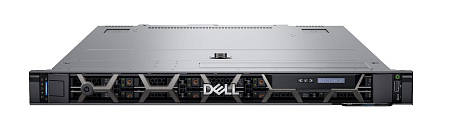
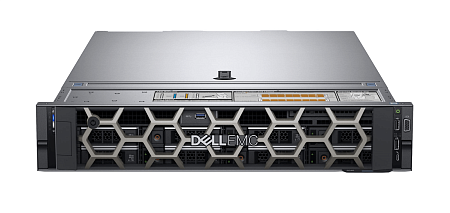
1. Dell PowerEdge R650 & R750: The Standard Setters
These are the foundational servers of the 15th generation, perfect for businesses that need a mix of general-purpose computing and moderate AI capabilities.
- Dell PowerEdge R650 (1U): A high-density server ideal for software development environments, heavy database management, and lightweight ML inferencing. Due to its 1U size, GPU support is limited to single-width cards (like NVIDIA T4 or L4), making it best for edge AI or data preparation rather than heavy model training.
- Dell PowerEdge R750 (2U): The industry standard. With its larger 2U chassis, it provides excellent cooling and space for up to two double-width GPUs (e.g., NVIDIA A30 or A40). This is the ideal choice for companies building local AI tools, running complex analytics, or deploying mid-sized ML models.
2. Dell PowerEdge R650xs & R750xs: The Budget-Optimized Choices
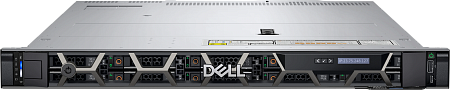
The "xs" designation means these servers are purposefully optimized for specific scale-out workloads. They support CPUs up to 32 cores per socket (instead of 40) and have fewer RAM slots.
- Best for: Startups and offline businesses needing reliable, cost-effective infrastructure for containerized applications, web hosting, and standard IT operations.
- AI/ML Application: While not designed for heavy GPU computing, they are incredibly cost-effective for data ingestion, preprocessing massive datasets before feeding them to your primary GPU cluster, or acting as robust management nodes in a larger AI server farm.
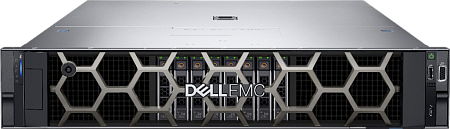
3. Dell PowerEdge R750xa: The Extreme Acceleration Beast
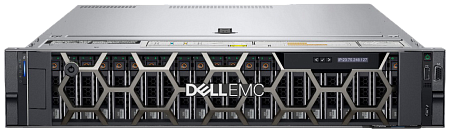
If your primary goal is training LLMs, deep learning, and advanced AI research, the R750xa ("Extreme Acceleration") is the undisputed king of the Intel lineup.
- Features: The internal layout is completely redesigned to prioritize GPUs. It can house up to four double-width enterprise GPUs (such as the NVIDIA A100) or up to six single-width GPUs.
- Why buy in 2026? The R750xa provides the exact same PCIe Gen 4 GPU bandwidth as newer models but at a vastly reduced chassis and CPU cost. For dedicated AI startups, this server offers the highest density of compute power per rack unit.
The AMD Dell PowerEdge 15th Gen Lineup:
Unprecedented Core Density and Value
The 15th Generation Dell servers powered by AMD EPYC processors (7002 "Rome" and 7003 "Milan") completely disrupted the market by offering massive core counts and exceptional memory bandwidth, which are critical for CPU-bound data processing tasks.
1. Single-Socket Value: Dell PowerEdge R6515 & R7515
Single-socket servers used to be considered "entry-level," but AMD EPYC changed the game. A single processor can pack up to 64 cores and 128 threads.
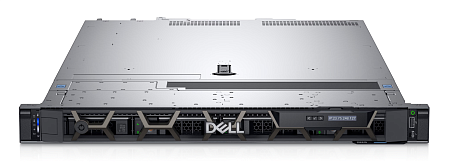
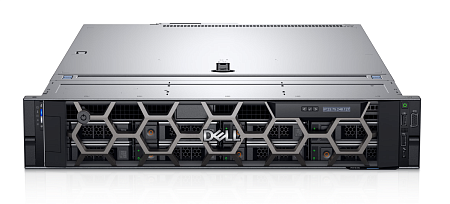
- Dell PowerEdge R6515 (1U) & R7515 (2U): These models are incredible money-savers. By using only one CPU, you drastically cut down on hardware costs and, crucially, per-socket software licensing costs (such as VMware).
- AI/ML Application: Excellent for big data analytics, Hadoop clusters, and CPU-based inferencing. The 2U R7515 can even accommodate up to four single-width GPUs, making it a highly economical choice for video analytics or edge AI processing in offline business locations (like smart retail).
2. Dual-Socket Titans: Dell PowerEdge R6525 & R7525
When you need the absolute maximum number of cores and PCIe lanes, the dual-socket AMD servers are the answer.
- Dell PowerEdge R6525 (1U): Offers up to 128 cores in a tiny 1U footprint. Perfect for high-performance computing (HPC) environments, heavy virtualization, and running massive, complex software development pipelines.
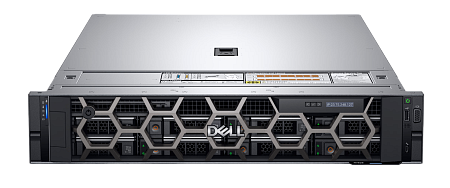
- Dell PowerEdge R7525 (2U): This is the direct AMD competitor to the Intel R750xa. The R7525 provides exceptional PCIe Gen 4 lane availability, allowing for the installation of up to three double-width GPUs. With its massive core density and GPU capacity, it is a powerhouse for parallel processing, AI model training, and complex rendering tasks.
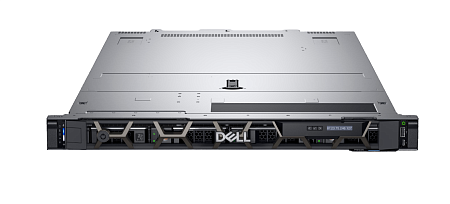
Dell PowerEdge 15th Gen AI/ML Server Comparison
To help you make a quick decision, here is a breakdown of the key specifications and primary AI/ML use cases for the models discussed:
| Model | Form Factor | Processor Series | Max Cores (Per Server) | GPU Support (Max) | Ideal AI/ML Use Case |
| R650 | 1U | Dual 3rd Gen Intel | Up to 80 | 3x Single-Width | Edge AI, Data Prep, ML Inferencing |
|---|---|---|---|---|---|
| R750 | 2U | Dual 3rd Gen Intel | Up to 80 | 2x Double-Width | Mid-sized ML, Local AI Tools, Analytics |
| R650xs | 1U | Dual 3rd Gen Intel | Up to 64 | None / Basic | Data Ingestion, Mgmt Nodes |
| R750xs |
2U |
Dual 3rd Gen Intel |
Up to 64 |
None / Basic |
Big Data Storage, Mgmt Nodes |
| R750xa | 2U | Dual 3rd Gen Intel | Up to 80 | 4x Double-Width | Heavy LLM Training, Deep Learning |
| R6515 | 1U | Single AMD EPYC | Up to 64 | 2x Single-Width | CPU-based Inferencing, Analytics |
| R7515 | 2U | Single AMD EPYC | Up to 64 | 4x Single-Width | Edge Analytics, Smart Retail AI |
| R6525 | 1U | Dual AMD EPYC | Up to 128 | 3x Single-Width | Dense Compute, HPC, Preprocessing |
| R7525 | 2U | Dual AMD EPYC | Up to 128 | 3x Double-Width | Heavy AI Training, Parallel Processing |
Conclusion: Making the Right Hardware Decision
Building an AI-ready data center in 2026 doesn't mean you have to drain your capital on the latest hardware. The refurbished Dell PowerEdge 15th Generation offers a strategic advantage, delivering the necessary PCIe 4.0 architecture, NVMe speeds, and high-end GPU support required for modern machine learning tasks.
- For heavy AI Training & LLMs: Opt for the R750xa or R7525 fully loaded with enterprise GPUs.
- For general ML and enterprise workloads: The R750 is the ultimate all-rounder.
- For cost-effective data processing and scaling: The AMD single-socket R7515 or the Intel R650xs offer unmatched ROI.
At NewServerLife, all our refurbished 15th Gen servers are rigorously tested, fully customizable to your specific AI workloads, and backed by a comprehensive warranty.


